
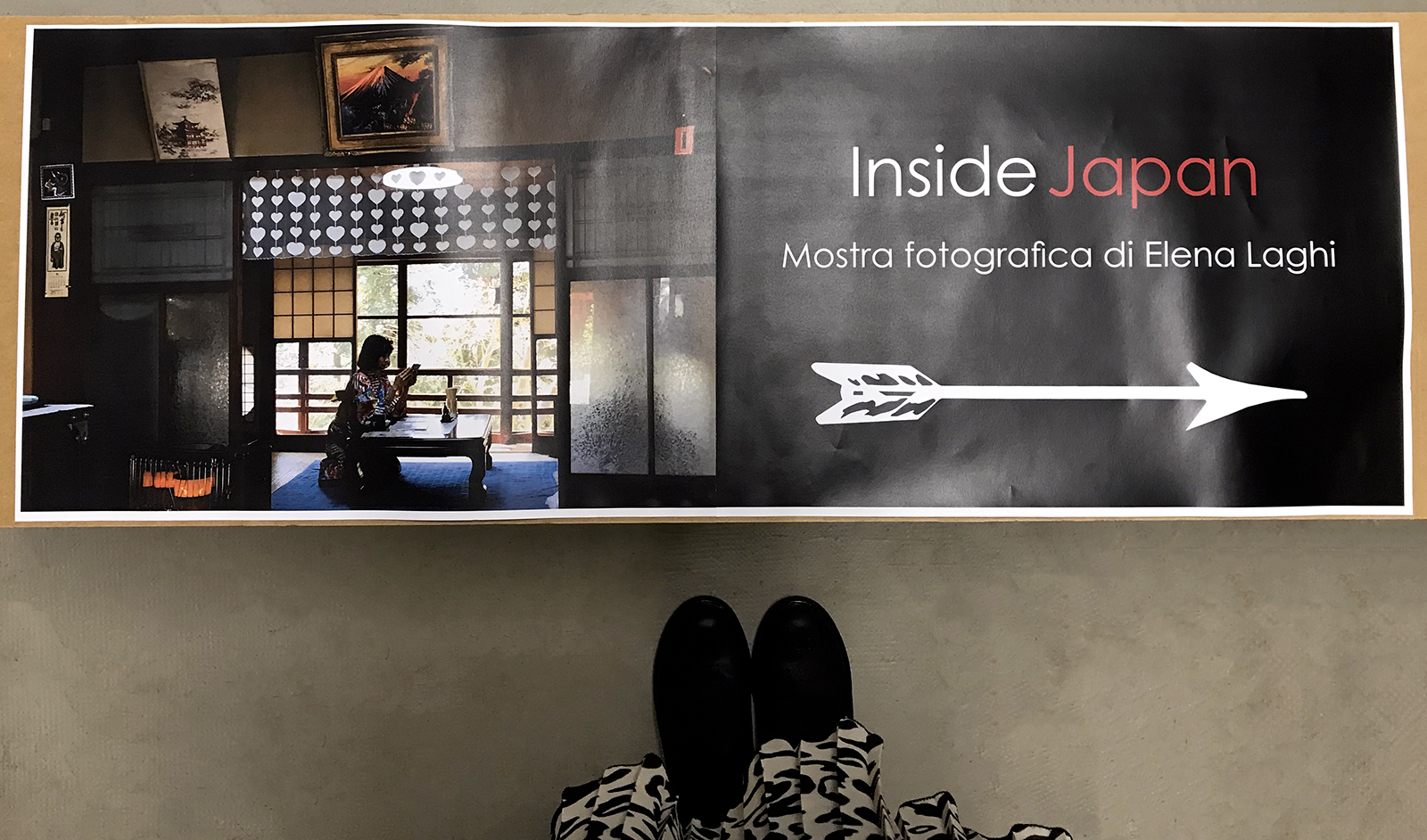
Welcome to Inside Japan! This is a little “virtual tour” for all the people who live abroad and cannot visit the exhibition, but also for the ones who still need to decide when to come 😉 remember that you have time until December 31, 2017. Contact me for a free tour, or take a look to the ones already scheduled on the Facebook event.
Benvenuti a Inside Japan! Questo è un piccolo “tour virtuale” per tutte le persone che vivono all’estero e che non possono visitare la mostra, ma anche per coloro che devono ancora decidere quando venire 😉 ricordatevi che avete tempo fino al 31 dicembre, 2017. Contattatemi per un tour gratuito, o date un’occhiata a quelli già programmati nell’evento di Facebook.
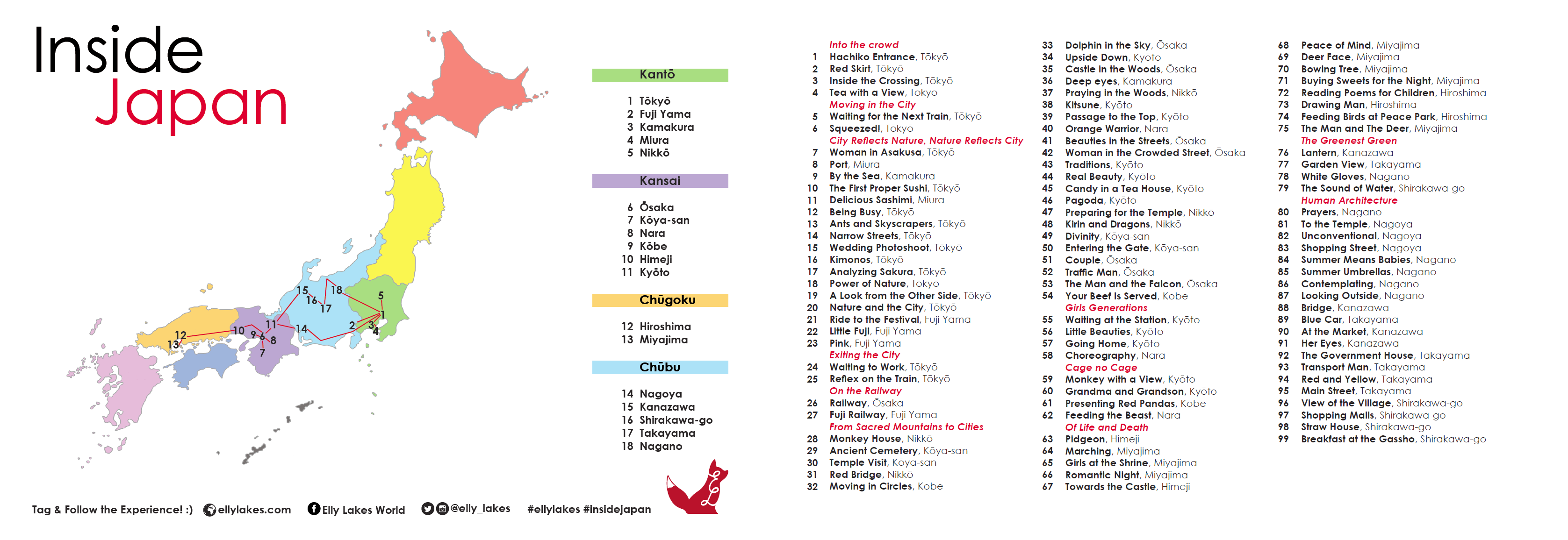
Grab the map and go!
This is Inside Japan‘s map, which will help you travel through the exhibition. You can also find the names of panels and pictures on it. Ready? Le’ts go!
Questa è la mappa di Inside Japan, che vi aiuterà a viaggiare attraverso la mostra. Su di essa potete trovare anche i nomi dei pannelli e delle fotogafie. Pronti? Partiamo!
– Into the Crowd –
When talking about Japan, one immediately thinks about Tokyo, and knows in particular the Shibuya neighborhood, which hosts the biggest crossing of the world!
Quando si parla di Giappone, si pensa immediatamente a Tokyo e si conosce in particolare il quartiere di Shibuya, che ospita il più grande incrocio del mondo!

– Moving in the City –
In Tokyo, people usually go to work and come back home with the metro. It’s true that they perfectly line up, while waiting for their train.
A Tokyo, le persone di solito vanno al lavoro e tornano a casa con la metro. È vero che si mettono in fila perfettamente, mentre aspettano il loro treno.

– City Reflects Nature, Nature Reflects City –
With this panel I want to show the huge urbanization one can find in Japan, but also the strong relationship with nature, which is studied and can be found on traditional clothing. By the sea, not so far from Tokyo, Miura is famous for the preparation of tuna.
Con questo pannello desidero mostrare l’enorme urbanizzazione che si può trovare in Giappone, ma anche il forte rapporto con la natura, che viene studiata e può essere trovata sugli abiti tradizionali. Al mare, non molto lontano da Tokyo, Miura è famosa per la preparazione del tonno.

– Exiting the City –
These panels refer to the “travel metaphor”: We take the Shinkansen, one of the fastest trains on earth, and depart from the big city to explore other beautiful places.
Questi pannelli si riferiscono alla “metafora del viaggio”: prendiamo lo Shinkansen, uno dei treni più veloci al mondo, e partiamo dalla grande città per esplorare altri bellissimi luoghi.

– From Sacred Mountains to Cities –
In Japan, mountains are sacred places where one can find magnificent temples, which are often UNESCO heritage. Here we can see Nikko, Koya-san, and mount Inari (Kyoto). On the left side, it’s curious the difference of clothing between modern cities (Osaka, Kobe), and the more ancient and traditional ones, like Kyoto, where people often dress in Kimono or Yukata. Kobe is famous for its beef, the picture on the bottom left corner shows one of its restaurants.
In Giappone, le montagne sono luoghi sacri dove si possono trovare magnifici templi, che sono spesso patrimonio UNESCO. Qui possiamo vedere Nikko, il Koya-san e il monte Inari (Kyoto). Sul lato sinistro, è curiosa la differenza di abbigliamento tra le città moderne (Osaka, Kobe) e quelle più antiche e tradizionali, come Kyoto, dove le persone si vestono spesso in Kimono o Yukata. Kobe è famosa per la sua carne, la foto nell’angolo in basso a sinistra mostra un suo ristorante.

– Girls Generations –
This panel is dedicated to different generations of women: From a couple of girls 2.0 who are taking a selfie in front of the Silver Pavilion in Kyoto, to the women in beautiful orange dresses who are performing a choreography in Nara.
Questo pannello è dedicato a diverse generazioni di donne: da una coppia di bimbe 2.0 che stanno facendo un selfie davanti al Padiglione d’argento a Kyoto, alle donne in bellissimi abiti arancioni che stanno eseguendo una coreografia a Nara.

– Cage no Cage –
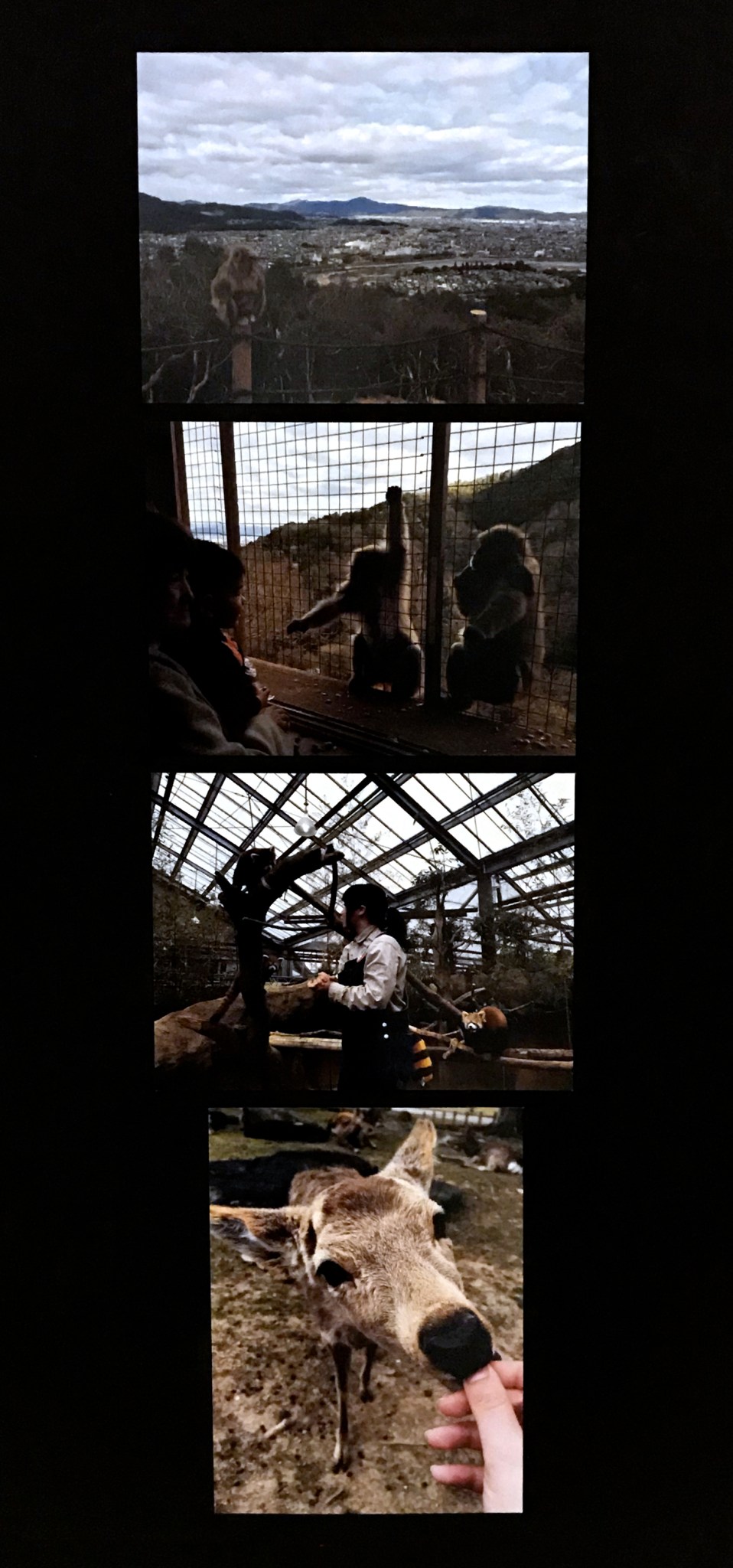
This panel is dedicated to animals, which are often kept free in Japan. Here are represented the zoo of Kobe, the deers of Nara, and a park in Kyoto, where humans have to be “in a cage” to feed the monkeys.
Questo pannello è dedicato agli animali, che sono spesso tenuti liberi in Giappone. Qui sono rappresentati lo zoo di Kobe, i cervi di Nara e un parco a Kyoto, dove gli umani devono stare “in gabbia” per nutrire le scimmiette.
– Of Life and Death –
We now head to the south and see the majestic Himeji’s castle, the remains and memories of the terrible atomic bomb in Hiroshima, and finally the beautiful sunsets, deers, school boys and girls in Miyajima.
Ora andiamo a sud e vediamo il maestoso castello di Himeji, i resti e le memorie della terribile bomba atomica di Hiroshima e infine i meravigliosi tramonti, cervi, scolaretti e ragazze a Miyajima.

– The Greenest Green –
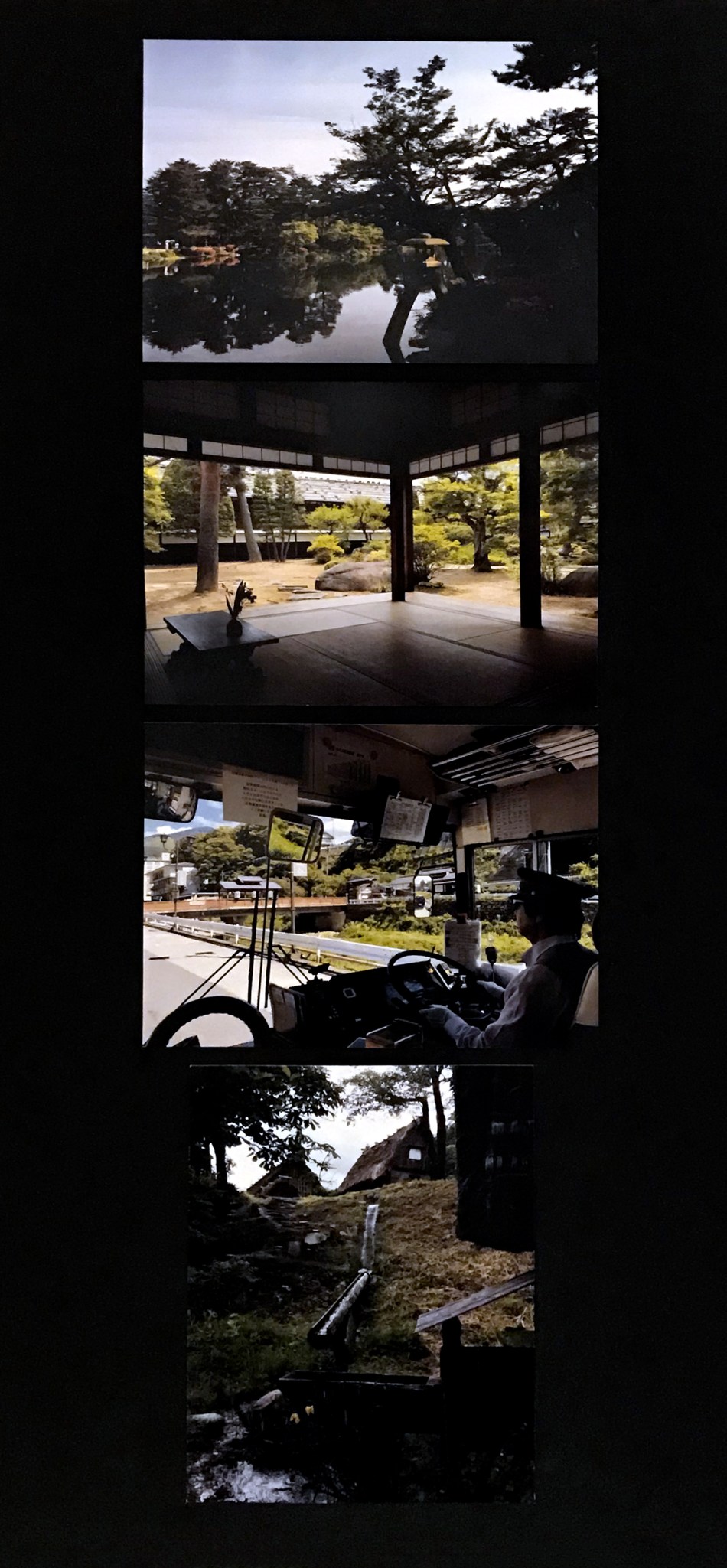
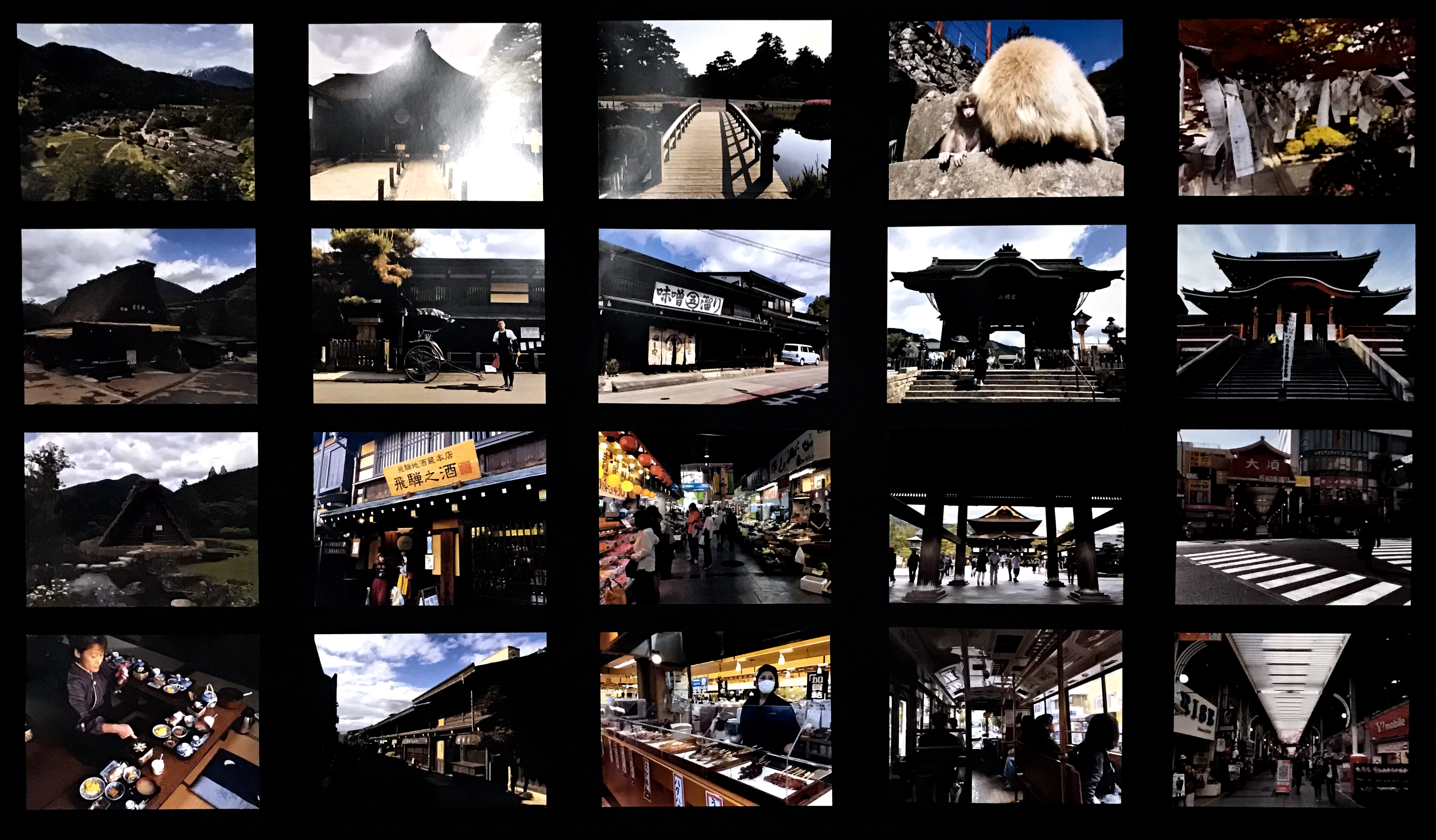
This panel is dedicated to the “green” we can find in Japan, which is represented by the big garden in Kanazawa, the view from the governor’s room in Takayama, the way to the monkey park near Nagano, and finally Shirakawa-go, an ancient village immersed into nature.
Questo pannello è dedicato al “verde” che possiamo trovare in Giappone, rappresentato dal grande giardino di Kanazawa, la vista dalla stanza del governatore a Takayama, la strada per il parco delle scimmie vicino a Nagano, e infine Shirakawa-go, un antico villaggio immerso nella natura.
– Human Architecture –
In the beautiful region of Chubu one can find cities like Nagoya, Nagano, and Kanazawa, but also more ancient ones like Takayama and Shirakawa-go, which maintain their old look. The Gassho Zukuri (straw houses) of Shirakawa-go can be 300 years old. Near Nagano, the monkeys are famous for their winter baths, while in summer there are a lot of babies.
Nella bellissima regione di Chubu si possono trovare città come Nagoya, Nagano e Kanazawa, ma anche di più antiche come Takayama e Shirakawa-go, che mantengono il loro vecchio aspetto. Le Gassho Zukuri (case di paglia) di Shirakawa-go possono avere 300 anni. Vicino a Nagano, le scimmie sono famose per i loro bagni invernali, mentre in estate ci sono molti cuccioli.
It’s not finished yet…
Of course there is much more to discover! This was just a summary. Feel free to contact me if you would like to have more information. You can read other articles dedicated to the exhibition here and here. You can also take a look at the event album on Facebook. Let me know what you think about the exhibition, and stay tuned 😉
Ovviamente c’è molto di più da scoprire! Questo era solo un riassunto. Sentitevi liberi di contattarmi se vi piacerrebbe avere più informazioni. Potete leggere altri articoli dedicati alla mostra qui e qui. Potete anche dare un’occhiata all’album dell’evento su Facebook. Fatemi sapere che cosa ne pensate della mostra e rimanete sintonizzati 😉
Thank you,
Grazie,
Elly
Dedicated page on the exhibition – with short documentary!

 Elly Lakes
2 thoughts on “Inside Japan – Exhibition Virtual Tour”