

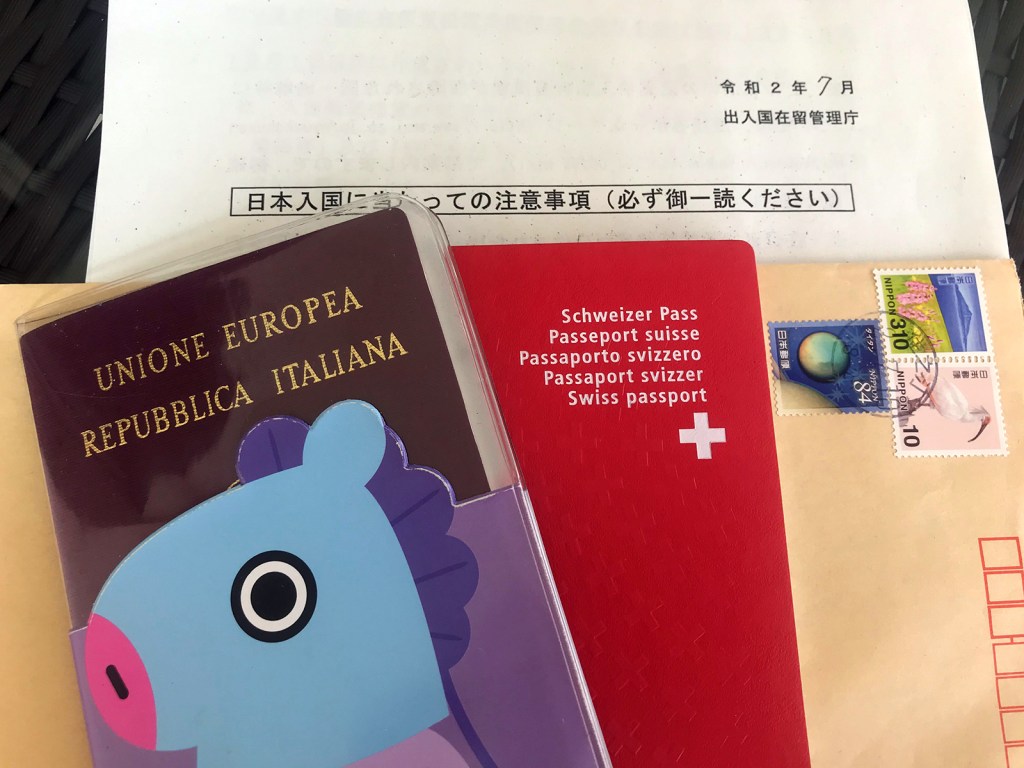
Hi everybody, hope everything is fine. My last article talked about my holidays, which now are just a memory. I miss Jack so much! I cannot wait to go back to Japan and restart my life. Recently I received many questions about how difficult it is to get a visa for Japan, while me and other foreigners wonder when we will be able to go to back there. This article aims to shortly reply to all these questions, first with an introduction about Japanese visas, and then about the current situation, with the description of my case and Jack’s one, who is living and working in Tokyo.
Japanese visas and CoE
To go to Japan, you have two main options:
1) Short stay visas: for example the Tourist Visa and the Business Visa (up to 90 days)
2) Long stay visas: for example the Student Visa (the one I had for my two years as a language student in Tokyo, you need a school in Japan to sponsor your visa); the Working Visa (you have to be sponsored by a company in Japan. This visa is divided in different categories depending on the kind of job you are going to do. For example, me and Jack hold the “Engineer/Specialist in humanities/International services” visa); the Spouse visa (you need to be married with a Japanese national). For the Long stay visas, before obtaining them, you need to apply and get the CoE (Certificate of Eligibility). Your school, company, or spouse will help you in the process. It will take a while to get it, expect from one to three months circa. Once you have it, you can go to the Japanese Embassy in your country and convert it into the “real” visa. From that moment, you have three months to enter Japan and that’s it! Once you arrive, you will get your “Zairyu Card” (Residence Card) at the airport, your “My Number” at your city’s town hall and all the things you need to live in Japan. Bear in mind that you should meet certain requirements to go to Japan with long stay visas, like for example a certain amount of money to sustain yourself for one year (e.g., for students), language skills (e.g., Japanese and English for work), education (e.g., university degree) and so on. Of course, the more requirements you meet, the better.
Current Corona situation
The current Corona situation completely destroyed the scheme above, many people saw their visas getting cancelled, others remained stranded in their family’s countries. Foreigners who kept staying in Japan found themselves “trapped” because unable to go out, due to the fact that they would not be able to re-enter Japan again. The only exceptions are for example the “humanitarian reasons” like a funeral or other bad circumstances. The CoE process for new visas became longer, the rules changed: Once the country opens up to workers, we will have six months to re-enter and not three (this is actually a good thing). The problem is, when will the country open to us again? The next two paragraphs explain two different points of view: Jack, foreign resident in Japan, and Elly, who holds a working visa.
Jack’s case: Foreign resident coming to Europe
Jack remained “trapped” in Japan as many others, working from home in quarantine and completely alone for seven months. Needless to say, his stamina and mental health were not at their best. How to reach Europe then, for a couple of weeks, to take a break and meet some beloved ones? We already had in our programs to go to France during the summer, and the solution came exactly from there: His grandma is unfortunately sick and needs daily support. What we did was 1) gathering her medical information; 2) gathering birth certificates to prove she was his grandma; 3) having Jack’s company write a letter that explained the situation in Japanese. He correctly fell into the “humanitarian reasons” explained above. Exiting Japan was easy: They gave him a letter stating that in normal circumstances he could not come back, and repeated him which documents were needed for re-entry. Coming back was more complicated: At Malpensa the staff at the check-in got lost for a moment, but after seeing all the documents they let him go; and in Narita he had to do the Covid test (negative) that took some time, then he had to rent a car (you cannot take public transportation) and go home where he is currently finishing his two weeks of quarantine.
Elly’s case: Working visa to Japan
I came back to Europe in January, three weeks before my student visa was going to expire. Funny enough, as soon as I landed, a company contacted me, asking if I was still in Japan. Unfortunately not, but we kept our communication open, the next months I had an interview with them and finally the good news: I got the job! The following weeks we started the working visa procedures, but then Covid got into our plans and everything became slower: The CoE arrived after four months, together with a letter that stated the new rule of the six months for re-entry. Now I cannot do anything, because I need to wait for Japan to open to workers again, to be able to convert my CoE in a “real” visa. This moment may come soon (we will know at the end of August), in the next months, or in April 2021! Which is for sure the month they will open, to workers at least. From various articles circulating online, it seems that they will ease restrictions in September for students first, but the situation is not so clear. We will see what happens in the next weeks. I will keep you posted on my social media pages.
That’s all for today. I hope Japan will open soon to visa holders willing to work and live there. If you want to help us go to Japan as soon as possible, you can sign this petition for vista holders and this petition for both students and workers. Your collaboration is very important!
Thank you,
Elly
Discover more about my Japanese experience: Inside Japan | Inside Japan – The Exhibition | Inside Japan – Living Tokyo! | Inside Japan – Virtual Tours!

Ciao a tutti, spero che vada tutto bene. Il mio ultimo articolo parlava delle mie vacanze, che ormai sono solo un ricordo. Mi manca così tanto Jack! Non vedo l’ora di tornare in Giappone e ricominciare la mia vita. Recentemente ho ricevuto molte domande su quanto sia difficile ottenere un visto per il Giappone, mentre io e altri stranieri ci chiediamo quando potremo tornare lì. Questo articolo si propone di rispondere brevemente a tutte queste domande, prima con un’introduzione sui visti giapponesi, e poi sulla situazione attuale, con la descrizione del mio caso e di quello di Jack, che vive e lavora a Tokyo.
Visti giapponesi e CoE
Per andare in Giappone, avete due opzioni principali:
1) Visti per soggiorni di breve durata: ad esempio il Visto Turistico e il Visto Business (fino a 90 giorni)
2) Visti per soggiorni di lunga durata: ad esempio il Visto Studentesco (quello che ho avuto per i miei due anni da studente di lingue a Tokyo, serve una scuola in Giappone per sponsorizzare il visto); il Visto Lavorativo (dovete essere sponsorizzati da un’azienda in Giappone. Questo visto è diviso in diverse categorie a seconda del tipo di lavoro che andrete a svolgere. Ad esempio, io e Jack abbiamo il visto “Ingegnere/Specialista in scienze umane/Servizi internazionali”); il Visto Sposo/a (è necessario essere sposati con un cittadino giapponese). Per i visti per soggiorni di lunga durata, prima di ottenerli, è necessario richiedere e ottenere il CoE (Certificate of Eligibility). La vostra scuola, azienda o coniuge vi aiuteranno nel processo. Ci vorrà del tempo per ottenerlo, aspettatevi da uno a tre mesi circa. Una volta che lo avete, potete andare all’ambasciata giapponese nel vostro paese e convertirlo in un visto “reale”. Da quel momento avete tre mesi per entrare in Giappone e il gioco è fatto! Una volta arrivati, riceverete la vostra “Zairyu Card” (Residence Card) in aeroporto, il vostro “My Number” presso il municipio della vostra città e tutte le cose di cui avete bisogno per vivere in Giappone. Tenete presente che dovreste soddisfare determinati requisiti per andare in Giappone con visti per soggiorni di lunga durata, come ad esempio una certa somma di denaro per sostenersi per un anno (ad esempio, per gli studenti), competenze linguistiche (ad esempio, giapponese e inglese per il lavoro), istruzione (ad esempio, diploma universitario) e così via. Naturalmente, più requisiti soddisfate, meglio è.
Attuale situazione con il Corona
L’attuale situazione con il Corona ha completamente distrutto lo schema di cui sopra, molte persone hanno visto i loro visti venire cancellati, altri sono rimasti bloccati nel loro paese di famiglia. Gli stranieri che hanno continuato a rimanere in Giappone si sono trovati “intrappolati” perché impossibilitati ad uscire, poiché non avrebbero più potuto rientrare in Giappone. Le uniche eccezioni sono ad esempio le “ragioni umanitarie” come un funerale o altre brutte circostanze. La procedura del CoE per i nuovi visti si è allungata, le regole sono cambiate: una volta che il Paese si aprirà ai lavoratori, avremo sei mesi per rientrare e non tre (questa è effettivamente una buona cosa). Il problema è: quando si riaprirà il Paese? I due paragrafi successivi spiegano due diversi punti di vista: Jack, straniero residente in Giappone, ed Elly, in possesso di un visto di lavoro.
Caso di Jack: residente straniero in arrivo in Europa
Jack è rimasto “intrappolato” in Giappone come molti altri, lavorando da casa in quarantena e completamente solo per sette mesi. Inutile dire che la sua resistenza e la sua salute mentale non erano al massimo. Come raggiungere quindi l’Europa, per un paio di settimane, per prendersi una pausa e incontrare alcuni cari? Avevamo già nei nostri programmi di andare in Francia durante l’estate, e la soluzione è arrivata proprio da lì: sua nonna è purtroppo malata e ha bisogno di sostegno quotidiano. Quello che abbiamo fatto è stato 1) raccogliere le sue informazioni mediche; 2) raccogliere certificati di nascita per dimostrare che era sua nonna; 3) chiedere all’azienda di Jack di scrivere una lettera che spiegasse la situazione in giapponese. È ricaduto correttamente nelle “ragioni umanitarie” spiegate sopra. Uscire dal Giappone è stato facile: gli hanno dato una lettera in cui affermava che in circostanze normali non poteva tornare e gli hanno ripetuto quali documenti erano necessari per il rientro. Il rientro è stato più complicato: a Malpensa il personale al check-in si è perso per un attimo, ma dopo aver visto tutti i documenti lo ha lasciato andare; e a Narita ha dovuto fare il test Covid (negativo) che ha richiesto un po’ di tempo, poi ha dovuto noleggiare un’auto (non è possibile prendere i mezzi pubblici) e tornare a casa dove sta terminando le sue due settimane di quarantena.
Caso di Elly: visto di lavoro per il Giappone
Sono tornata in Europa a gennaio, tre settimane prima della scadenza del mio visto per studenti. Abbastanza divertente, non appena sono atterrata, un’azienda mi ha contattata chiedendomi se fossi ancora in Giappone. Purtroppo no, ma abbiamo mantenuto aperta la nostra comunicazione, nei mesi successivi ho avuto un colloquio con loro e finalmente la buona notizia: ho ottenuto il lavoro! Nelle settimane successive abbiamo avviato le procedure per il visto di lavoro, ma poi il Covid è entrato nei nostri piani e tutto è diventato più lento: il CoE è arrivato dopo quattro mesi, insieme a una lettera che stabiliva la nuova regola dei sei mesi per il rientro. Adesso non posso fare nulla, perché devo aspettare che il Giappone riapra ai lavoratori, per poter convertire il mio CoE in un visto “vero”. Questo momento potrebbe arrivare presto (lo sapremo alla fine di agosto), nei prossimi mesi, o nell’aprile 2021! Che è sicuramente il mese in cui si apriranno, almeno ai lavoratori. Da vari articoli che circolano online, sembra che a settembre allenteranno prima le restrizioni per gli studenti, ma la situazione non è così chiara. Vedremo cosa succederà nelle prossime settimane. Vi terrò aggiornati sulle mie pagine social media.
Per oggi è tutto. Spero che il Giappone si apra presto ai possedenti di visto disposti a lavorare e vivere lì. Se volete aiutarci ad andare in Giappone il prima possibile, potete firmare questa petizione per i possessori di visto e questa petizione per studenti e lavoratori. La vostra collaborazione è molto importante!
Grazie,
Elly
Scoprite di più sulla mia esperienza giapponese: Inside Japan | Inside Japan – The Exhibition | Inside Japan – Living Tokyo! | Inside Japan – Virtual Tours!

 Elly Lakes
3 thoughts on “Inside Japan – Certificates of Eligibility, Visas, and Current Situation”